Studio Sessions
Connecting the experiences of artists and listeners through a live listening feature that integrates user interaction & exploration.
Context
Amazon Music was my first designathon, and it taught me just how much can happen in eight hours. Together with an incredibly talented team — Anika Edara, Tung Nguyen, and Harshini Jayaprakash — I learned to navigate ambiguity, make quick design decisions, and turn ideas into a polished concept under pressure.
The Brief
Music has always been social — something people share, debate, and bond over. But most streaming platforms treat it as a solo activity. Amazon Music wanted to change that by finding new ways to connect creators and listeners across all content types.
How Might WeHow might Amazon Music develop global experiences that create new ways for creators and listeners across all content types to engage with the product?
What I Explored
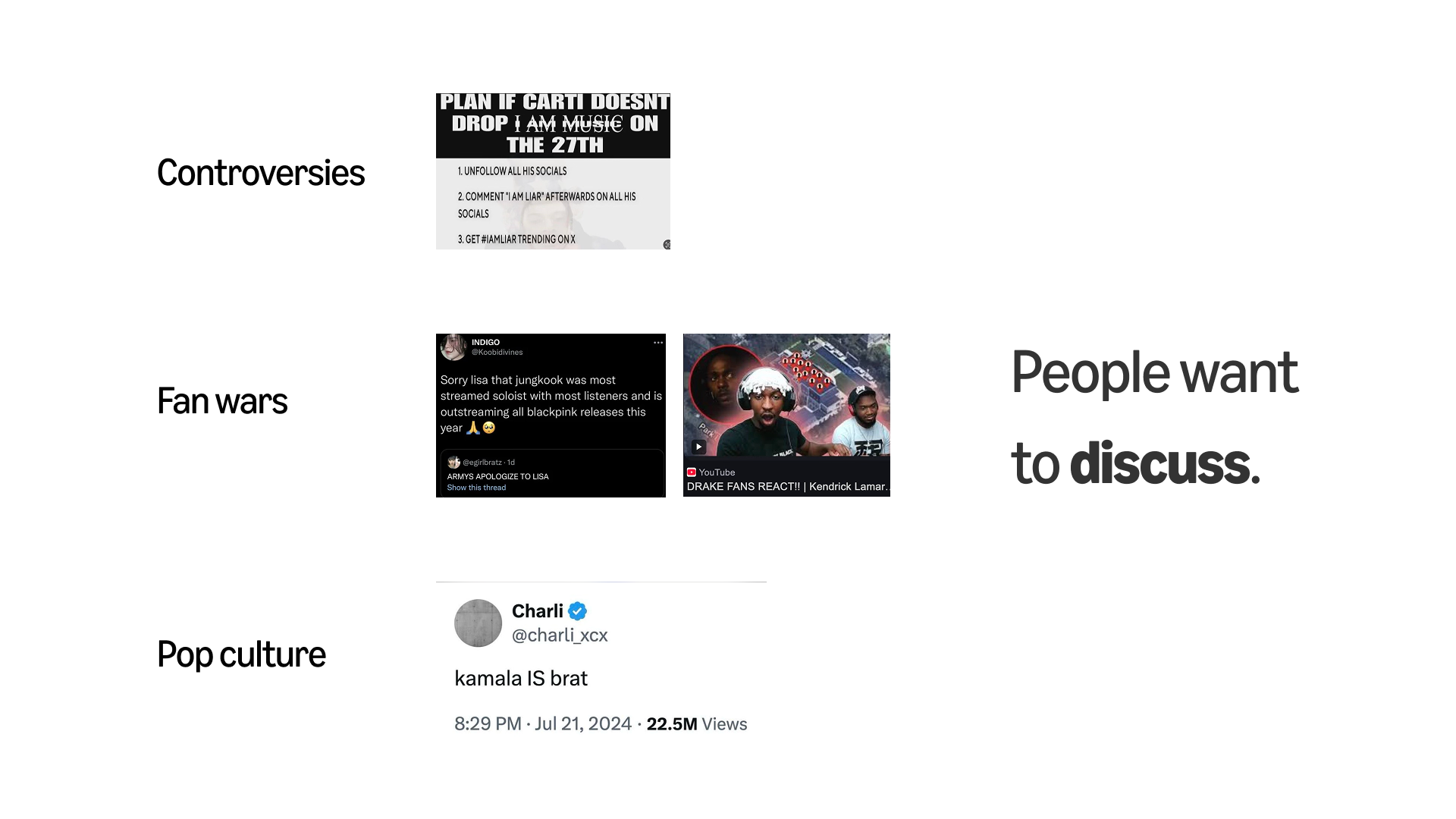
I dug into something that felt personally familiar: why younger people use music to connect. For a lot of us, music isn’t just background noise — it’s how we find our people, signal who we are, and feel part of something bigger. That emotional undercurrent became the lens I brought to our research.
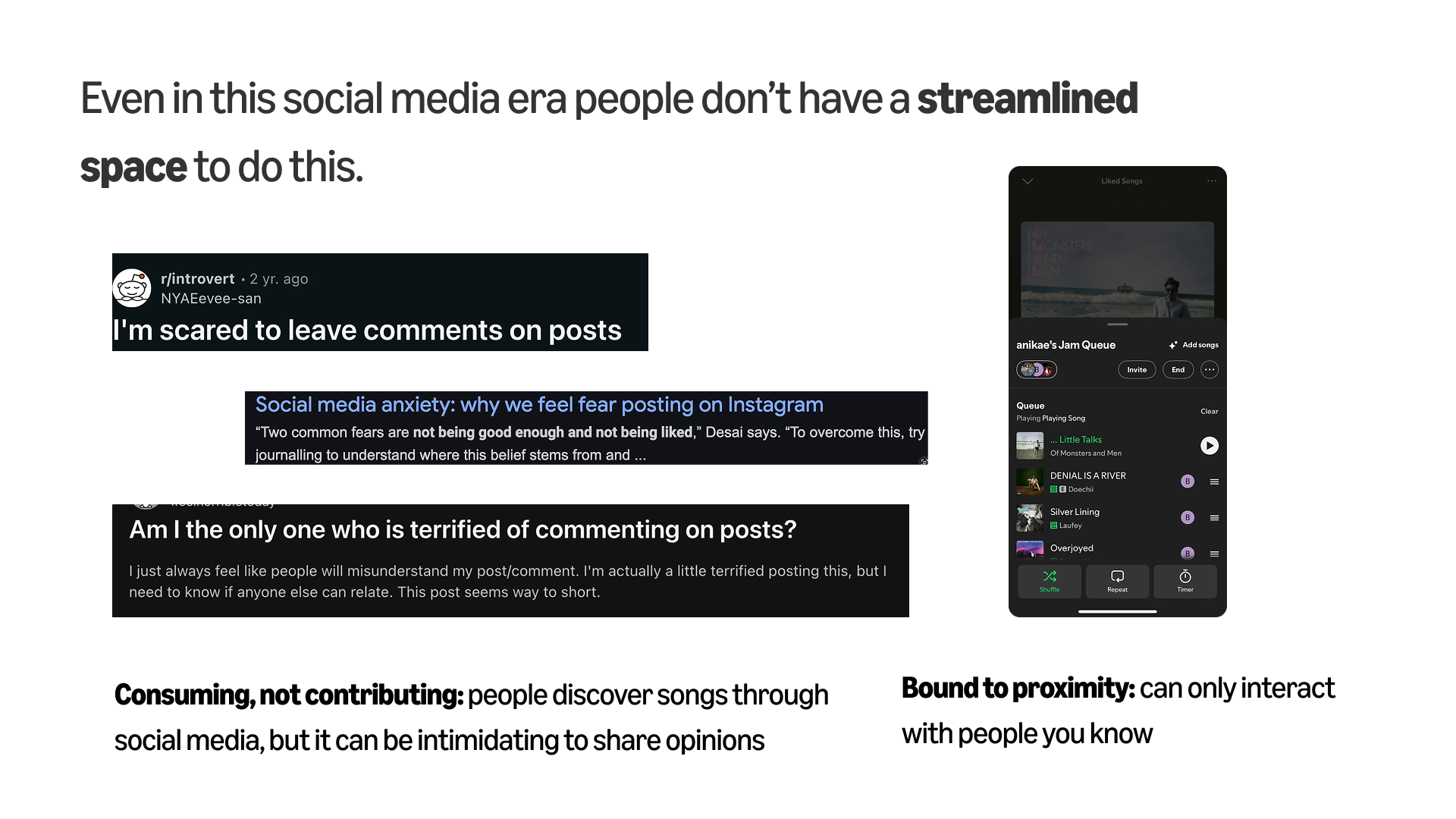
What kept coming up was a gap between wanting to participate and feeling safe enough to do so. People have opinions about music — strong ones — but putting them out publicly feels vulnerable. That tension shaped where we took our solution.
How We Researched
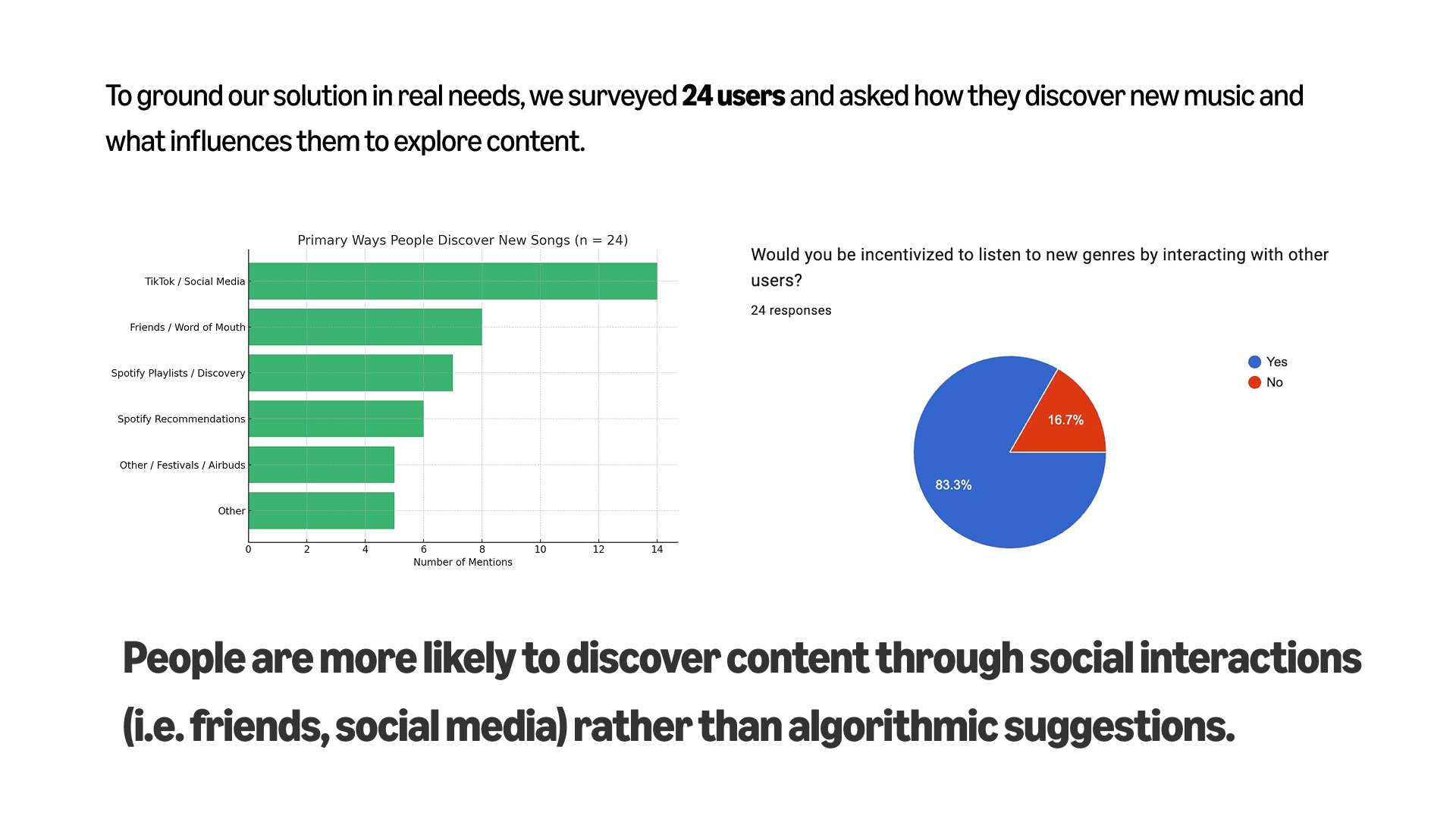
With just eight hours on the clock, we moved fast but stayed grounded — surveying 24 music listeners and stress-testing our assumptions against what existing platforms were already doing.
24 User Surveys
Quick but targeted — we asked how people discover music, where they talk about it, and what makes them hesitate to engage publicly on streaming platforms.
Competitive Landscape
We mapped the major platforms against two axes: community-building strength and music discovery. Most cluster in the same corner — good at curation, weak on contribution.
Feature Audit
We looked at what social features actually exist across Spotify, Apple Music, and others. Most are passive or buried — not designed to make people feel part of something.
What We Found
Where the Idea Came From
We kept asking ourselves: when did music feel most communal? The answer kept pointing to the same place — the radio. Before algorithms and personalization, music was something people experienced together in real time, with strangers, around a shared signal.
That’s what streaming platforms have optimized away. They’re incredible at giving you your music — but terrible at giving you a moment to share with someone else. We wanted to bring that back.
The human component.
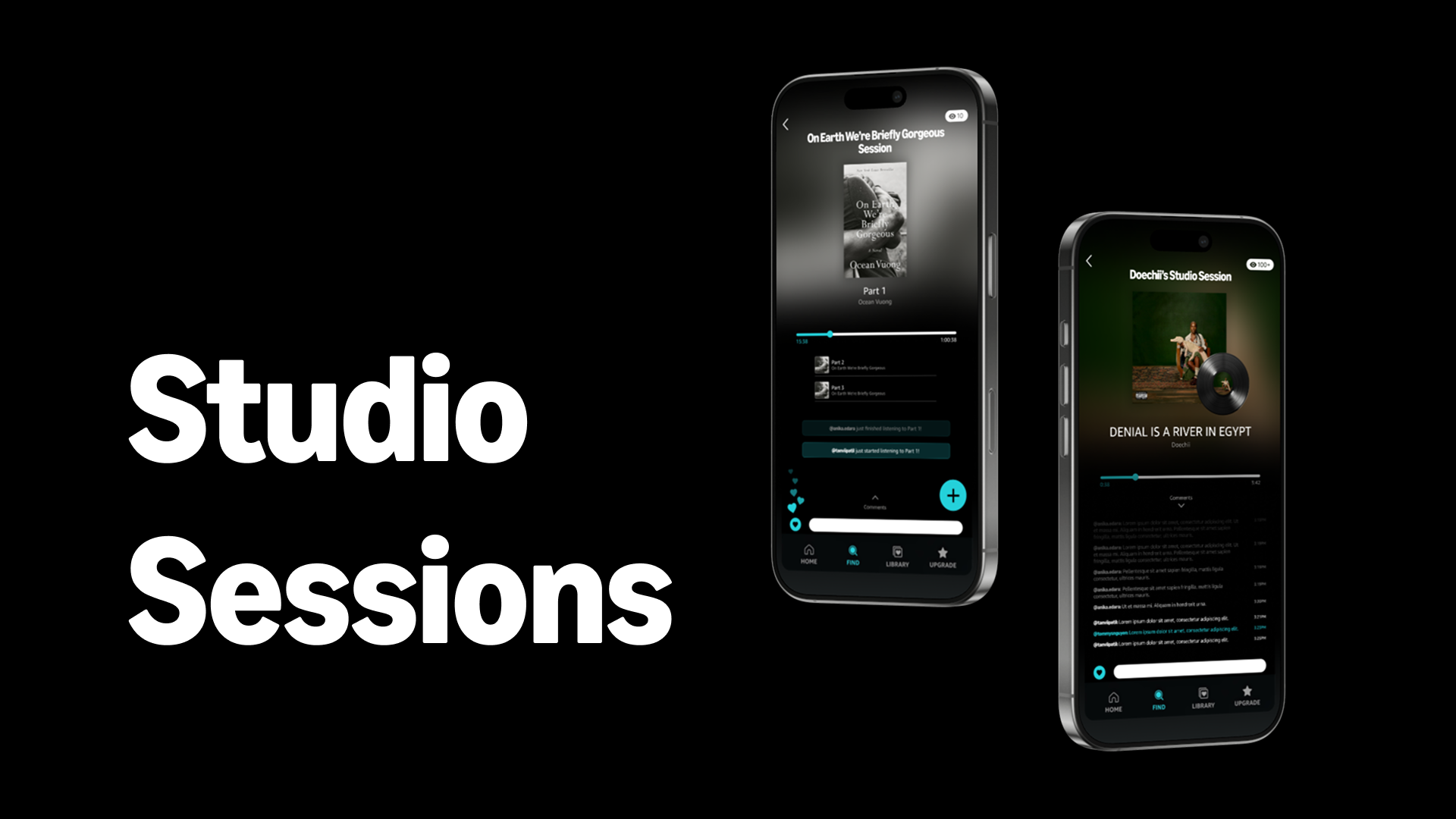
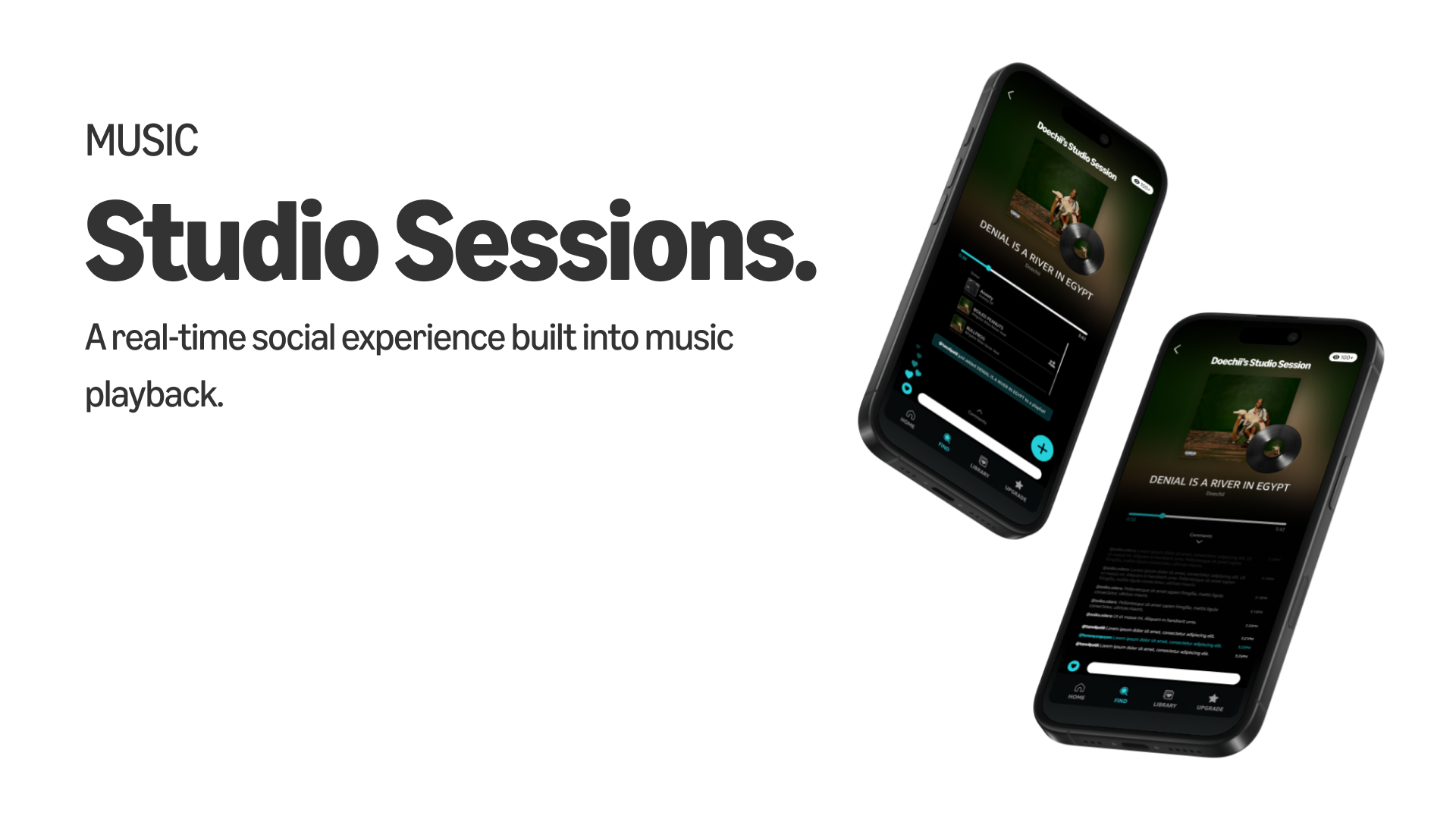
Studio Sessions
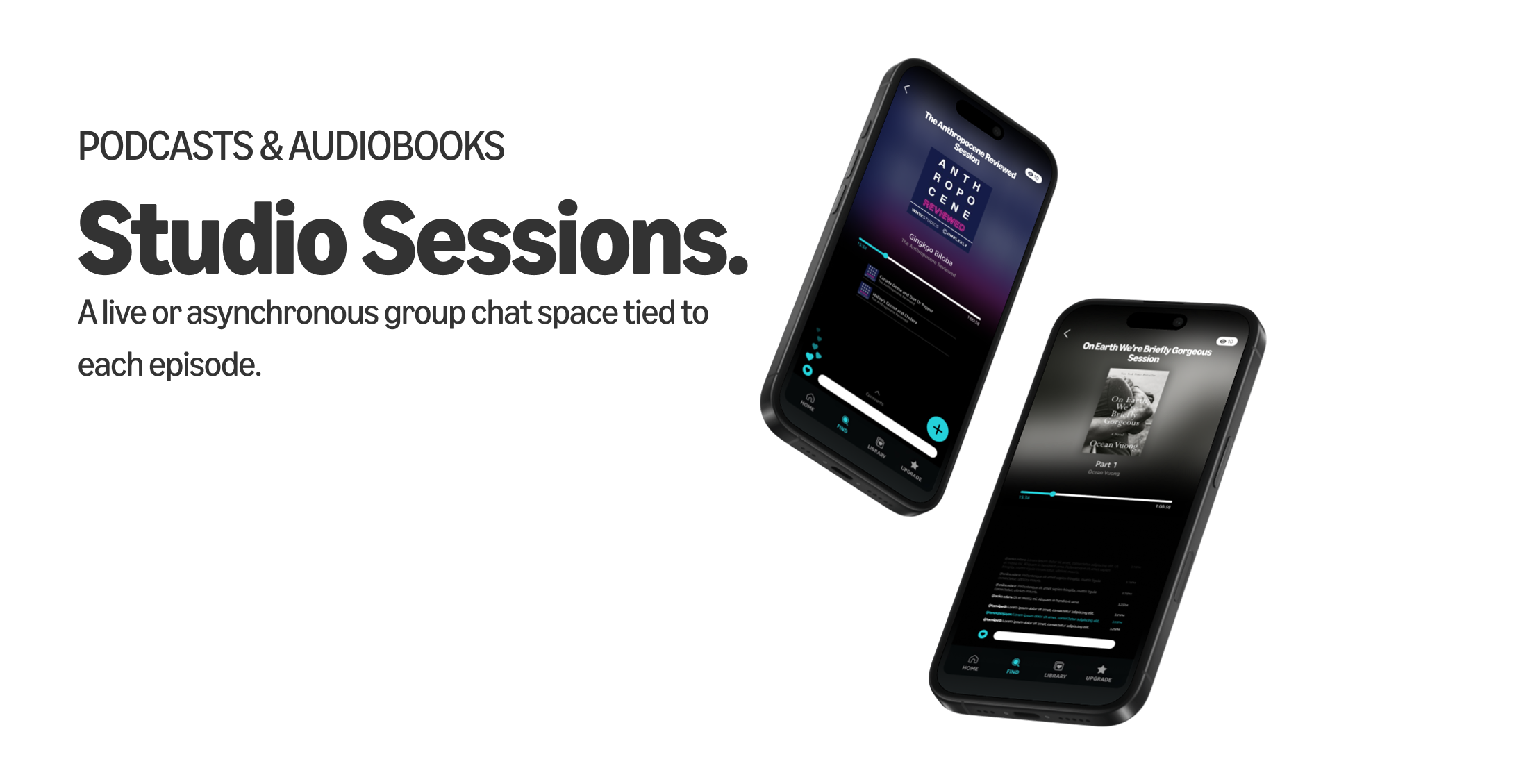
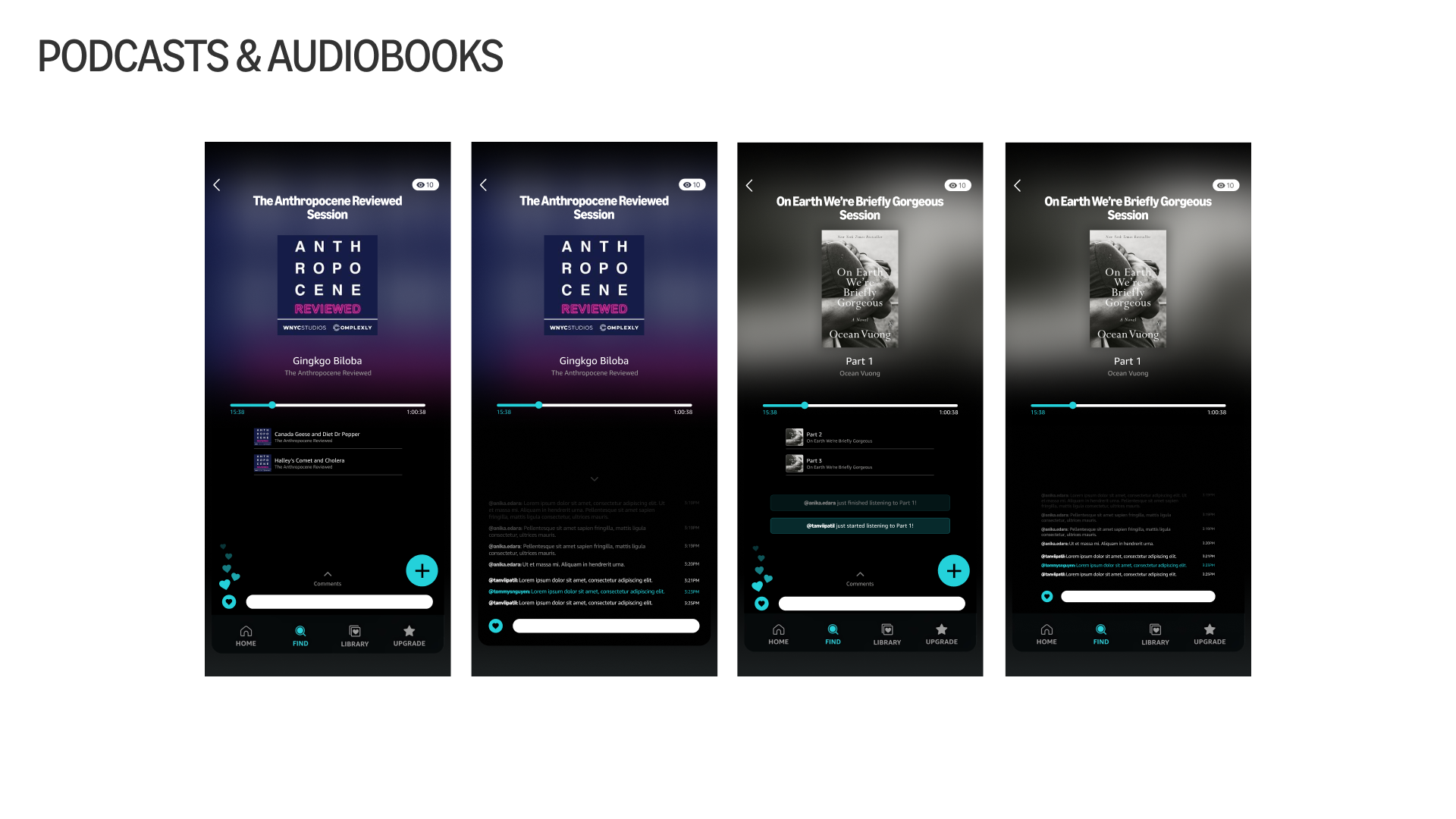
Studio Sessions gives artists a space to host live listening events — and gives fans a low-pressure way to actually show up. It’s not a comment section bolted onto a playlist. It’s a shared room, designed from the ground up to make participation feel safe and natural.
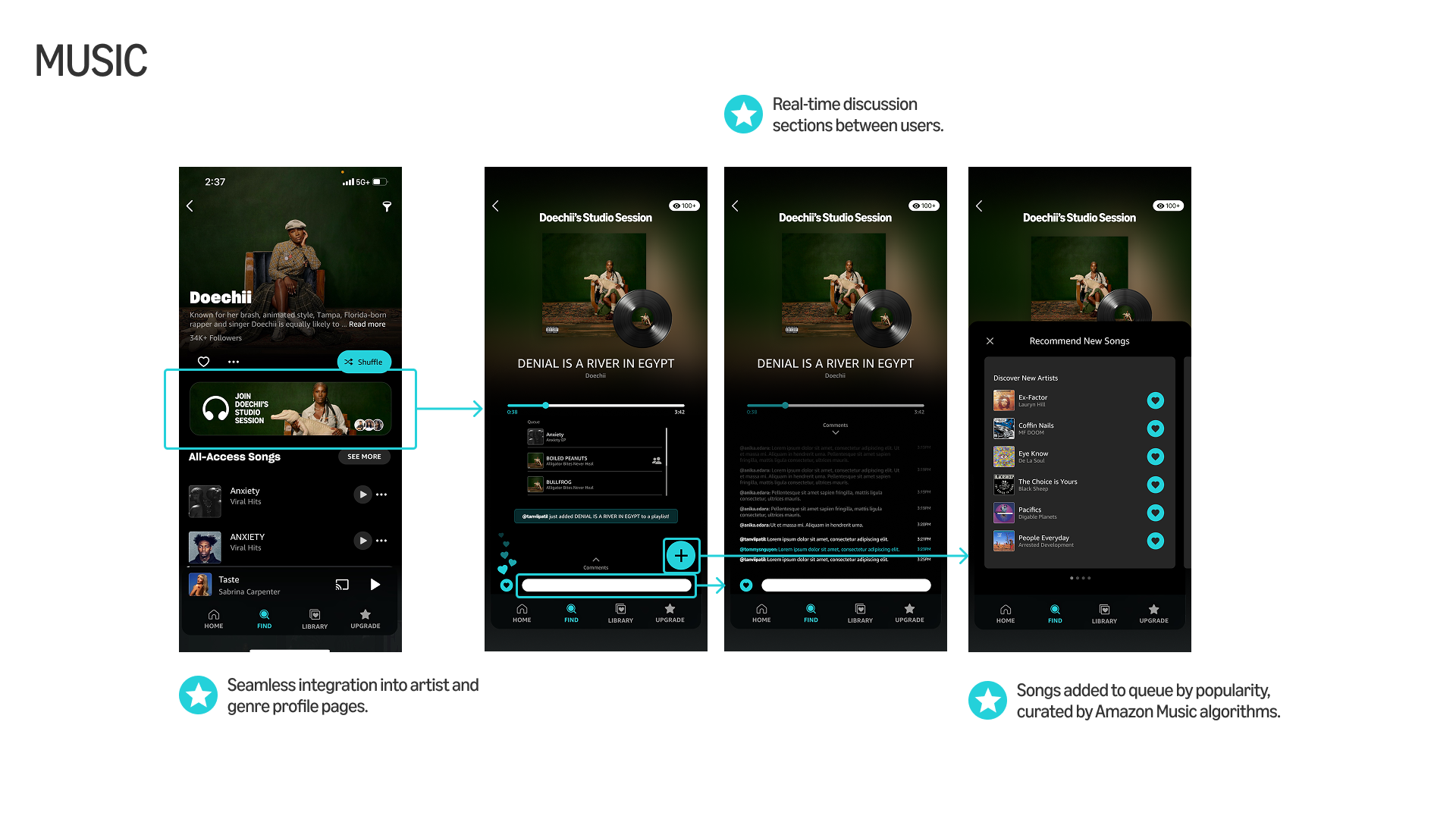
How It Works
Finding a Session
A dedicated hub surfaces upcoming artist-led events filtered by genre or artist — so discovering something new feels intentional, not accidental.
Joining the Room
Pinned artist notes and live context set the tone before anyone says a word. It’s designed to lower the barrier to entry — you can just listen, and that’s enough.
Participating
Fans can request tracks, react to what’s playing, and chat with other listeners — all in separate tabs so you can choose how much or how little you engage.
What I Took Away
This experience showed me how much clarity matters when time is short. The research angle I focused on — why music is emotional and social for younger people — gave our team a north star when decisions needed to be made fast. Without that grounding, it’s easy to design something technically solid but emotionally empty. I’m proud we didn’t.